


Dog Nail Care 101: The Quick, Black Nails, Puppies & FAQs
Dog Nail Care 101: Everything You Need to Know (From a Vet Tech of Nearly Two Decades)
I'm Chris — I spent nearly two decades as a veterinary technician before founding Zakity, a pet products company built around what I actually saw work in the clinic. Nail trimming caused more owner anxiety than almost anything else I dealt with. I've had people tell me they'd rather bathe a muddy dog, give a pill, or clean up a mess than pick up the clippers. So I put everything I've learned into one place — the science behind the quick, how often to trim, black nails, puppy training, overgrown nails, and what to do if you mess up (because everyone eventually does).
If you're looking for the step-by-step walkthrough of using the Zakity Nail Clipper specifically, check out my dedicated trim guide. This piece is the bigger picture — everything I wish every dog owner understood about nail care, regardless of what clippers are in your hand.
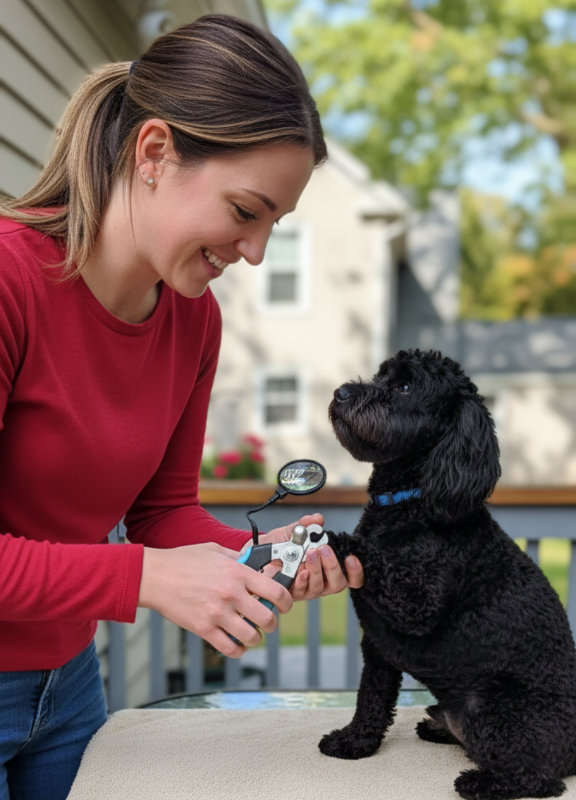
Why Nail Trimming Matters More Than People Think
Dog nail care isn't just cosmetic. When nails get too long, they touch the ground before the paw pad does, which changes how your dog stands and walks. Over time, overgrown nails can strain the toes, mess with traction on hard floors, and make normal movement uncomfortable.
Here's the part most people don't realize: the quick (the blood vessel and nerve inside the nail) grows along with the nail. So the longer you wait to trim, the farther the quick creeps toward the tip — which makes the next trim even scarier. Waiting because you're afraid of hitting the quick is exactly what makes hitting the quick more likely down the road.
How Often Should You Trim Your Dog's Nails?
There's no single schedule that fits every dog. Active dogs that spend a lot of time on pavement often wear their nails down naturally. Indoor dogs and senior dogs usually need trims more often.
Rather than going by the calendar, watch and listen:
- Nails clicking loudly on hardwood or tile = time to check
- Nails touching the ground while your dog stands normally = they're getting too long
- As a general rule, checking every 2–4 weeks keeps most dogs in a good range
Dewclaws are the easy one to forget, since they never touch the ground to wear down naturally.
Understanding the Quick (and Why It's Not as Scary as It Sounds)
The quick is just the living part inside the nail — nerves and blood vessels. Cut into it and your dog will likely yelp, pull away, and the nail may bleed. It happens to basically everyone eventually, including vet techs and professional groomers. It's not a sign you're bad at this.
The fix is simple: trim small amounts, look at the cut surface, then decide if you need to take a little more. Don't try to finish a nail in one cut — that's the single biggest mistake I saw in years of clinic work.
Black Dog Nails: Not as Impossible as They Look
Black nails get a bad reputation because you can't see the quick through them the way you often can with white nails. That doesn't mean you're stuck guessing.
- Trim in small slivers, not big chunks
- Check the cut surface after every clip — you'll start to notice the texture and color change as you get closer to the quick
- Go slower than you think you need to
Millions of dogs have black nails and get trimmed safely all the time. It just requires more patience, not more risk.
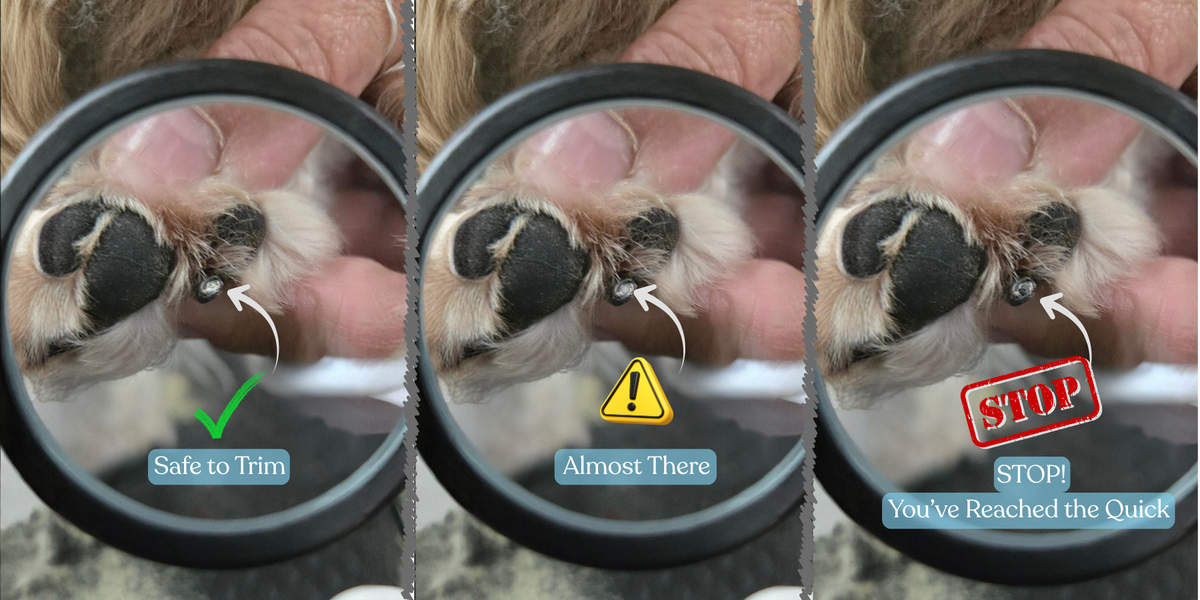
The center of the nail changes color as you get closer to the quick — a lighter gray or pinkish tone means you still have room, while a darker, denser center means it's time to stop.
Choosing Dog Nail Clippers vs. a Grinder
Dog nail clippers — fast, quiet, cheap, portable, great for routine maintenance. The tradeoff is they require some confidence about where you're cutting.
Nail grinders — remove nail gradually and smooth rough edges, which some owners find more forgiving. They're louder, some dogs dislike the vibration, and hair can occasionally catch in the drum if you're not careful.
You don't have to pick a side. A lot of groomers and vet professionals clip first, then smooth with a grinder if needed. Whatever dog nail trimmer you use, the goal is the same: don't cut anything you're not confident about.
If I could change one thing about most clippers on the market, it's visibility. I watched owners struggle for years — especially with black nails, in bad lighting, or with dark-coated dogs — simply because they couldn't clearly see the quick before cutting. That's the whole reason I designed the Zakity Nail Clipper with a built-in 3× magnifier. Whatever clippers you use, mine or someone else's, the advice is the same: never make a cut you're not confident about.
Step-by-Step: How to Trim Your Dog's Nails
- Pick a calm moment and location. Good lighting matters more than almost anything else here.
- Get everything within reach first — clippers, styptic powder, treats, a towel — so you're not hunting for supplies mid-trim.
- Handle the paw gently. No need to grip tightly. If your dog pulls away, let them settle and try again.
- Look before you cut. Identify the direction of the nail, and if it's a light nail, look for the quick. The Zakity nail clipper has an adjustable magnifier to help you see better.
- Trim small amounts, then pause and reassess. You can always take more off. You can't put it back on.
- Reward your dog — even if you only get through one nail. You're teaching them that nail trims predict good things, which makes every future trim easier.
For more detail on this — including exact trim distances and clipper angle tips — see my full step-by-step dog nail trim guide.
Puppy Nail Training: The Best Head Start
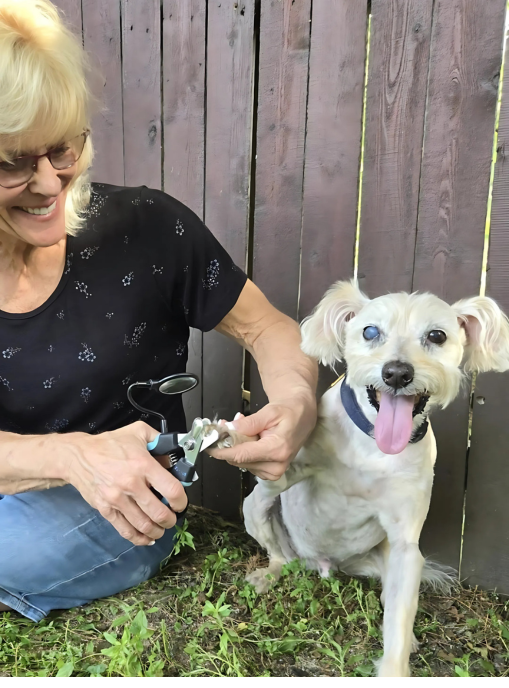
The best thing you can do for a puppy isn't trimming often — it's teaching them early that having their paws touched is normal. Touch each toe, massage the pads, hold a foot for a few seconds, reward, repeat. Let them see and sniff the clippers before you ever use them near a nail. That early investment in puppy nail training can pay off for the dog's whole life.
I put together a quick video showing this desensitizing technique if you want to see it in action — it works for nervous adult dogs too, not just puppies.
What If Your Dog Hates Nail Trims?
Don't assume it's stubbornness — it's usually fear. If your dog gets stressed, back up a step. Maybe today's win is just touching one paw. Tomorrow, holding it for five seconds. One successful nail is better than ten stressful ones, and progress doesn't have to happen all at once.
Overgrown Nails: How to Catch Up Safely
If nails have gotten seriously overgrown, resist the urge to fix it all in one sitting. Trim a little from each nail, give the quick time to recede, and come back in a week or two to take a bit more. Rushing it is how accidents happen.
Common Nail Trimming Myths
- "If my dog yelps, I must have hit the quick." Not necessarily — some dogs just don't like their paws handled. Check for bleeding before assuming the worst.
- "Black nails can't be trimmed safely." False — just requires patience.
- "I have to finish every nail in one session." No. One calm trim beats ten stressful ones.
- "My dog will hate nail trims forever." Most dogs can learn to tolerate or even relax during trims with enough positive association.
If You Accidentally Cut the Quick
Take a breath — it happens to everyone eventually, professionals included. Apply styptic powder if you have it (plain cornstarch works in a pinch if you don't), apply gentle pressure, let your dog settle, and end on something positive. One accident doesn't undo the trust you've built.
Frequently Asked Questions
How often should I trim my dog's nails? Most dogs do well with a check every 2–4 weeks, though very active dogs on pavement may need it less often and indoor or senior dogs may need it more.
What's the best way to trim black dog nails? Trim in small slivers and check the cut surface after each one. You'll start to notice a change in texture and color as you approach the quick — that's your cue to stop. My step-by-step dog nail trim guide has photos showing exactly what to look for.
How do I find the quick on my dog's nail? On light nails, look for a pink area visible through the nail. On black nails, you can't see it directly, so trim conservatively and watch the cut surface for changes instead.
What should I do if I cut the quick? Stay calm, apply styptic powder (or plain cornstarch if that's what you have on hand) and gentle pressure, and give your dog a chance to settle. It happens to nearly everyone at some point and won't undo your dog's trust in you.
When should I start puppy nail training? As early as possible. Start with paw handling and rewards before you ever introduce clippers — this pays off for the dog's entire life.
How do I deal with severely overgrown nails? Don't try to fix them in one sitting. Trim a small amount from each nail, wait for the quick to gradually recede over a week or two, then trim again. If the nails are severely overgrown, it's worth checking in with your veterinarian first — they can advise on the safest way to catch up, especially if the nails have started curling or affecting how your dog walks.
Are dog nail clippers or a grinder better? Neither is universally better — clippers are faster and quieter, grinders smooth edges gradually. Many people use both: clip first, then smooth with a grinder.
Can I use human nail clippers on my dog? I wouldn't. Dog nails and human nails aren't shaped the same, and dog nail clippers were designed specifically for the thickness and curve of a dog's nail — you'll get much better control and a cleaner cut with the right tool.
After years of doing dog grooming at home for my own dogs and hundreds of others' in clinic, the biggest thing I want owners to walk away with is this: don't focus on finishing the trim, focus on building confidence. Small, regular sessions beat big, stressful ones every time.
Free Resources If You Want More Help
I put together a free set of resources to make nail trimming easier:
- A printable nail trim log to help you track trims and stay on schedule
- A video walkthrough showing exactly how I use the Zakity Nail Clipper (including the magnifier)
- Step-by-step dog and cat nail trimming guides with more detail than I could fit here
Ready to trim with better visibility? Check out the Zakity Nail Clipper — built with a 3× magnifier so you can actually see what you're cutting, especially on black nails.
About the founder: Christina is the founder of Zakity and a former veterinary technician with nearly two decades of hands-on animal care experience. She has worked in animal rescue, conducted animal cruelty investigations, and educated pet owners on proper animal care — including time spent as an adjunct professor. Christina founded Zakity to give pet owners better tools for caring for their animals confidently at home, and to give back to the shelters and rescues she is deeply passionate about supporting. 3% of every Zakity purchase goes directly to animal shelters and rescues. Learn more at zakity.com.
This article provides general information and is not a substitute for professional veterinary advice. Always consult your veterinarian regarding specific health concerns or conditions affecting your pet.